
Diabetes care client website redesign, discovery, audience definition • 2025
Transforming a diabetes website company’s site from an information hub into an intuitive, emotionally grounding, and decisively helpful extension of the product
Overview: My team partnered with a company in the insulin pump space to redesign their website, transforming it from an information-heavy hub into an intuitive, emotionally supportive, and globally scalable experience. I led a two-phase research effort: the first focused on U.S. audience mindsets and core needs, and the second on global audiences and scaling insights across markets.
My responsibilities: I led research design, guided our approach alongside my co-researcher, developed moderator guides and a survey, recruited patients and healthcare providers, moderated interviews, analyzed qualitative and quantitative data, and synthesized findings into actionable audience definitions, core needs, and website strategy for both U.S. and international audiences. I also engaged directly with client stakeholders to share insights and ensure alignment throughout the project.
My team: 2 Researchers, 2 Strategists, 1 Producer
The existing website was overly complex and disconnected from user needs. It made a hard health decision even harder.
CONTEXT & PROBLEM
My client was experiencing rapid growth in US markets as more people with diabetes were looking for smarter, more supportive diabetes management tools. To meet this demand, they needed to build a website that was accessible and intuitive.
In its current state, it was overly complex, and hindered users’ ability to understand, convert, and self-serve their support needs.

Rather than simple problems, it was broad and structural ones blocking progress:
Strategic ambiguity: No shared vision for what the site was or who it served.
Content misalignment: Content was hard to find, confusing to read, and often off-tone.
Operational fragility: Site operations were slow, siloed, and hard to scale.
Tooling constraints: Legacy tech, disconnected platforms, and limited instrumentation was a blocker.
Ecosystem sprawl: The experience was fractured across sites, portals, apps, and codebases.
Research was responsible for clarifying what the site must do, who it must serve, and why.
MY ROLE
While our client had an abundance of existing research, it was unfocused and lacked strategically directional recommendations. Our team needed to identify what the team really knew, what the gaps were, and design a research plan that brought emotional context, lived experience, and audience mindsets into focus.
These foundations would ultimately shape audience definitions, mindsets, and journey maps that the design team would carry into and utilize in phase two.
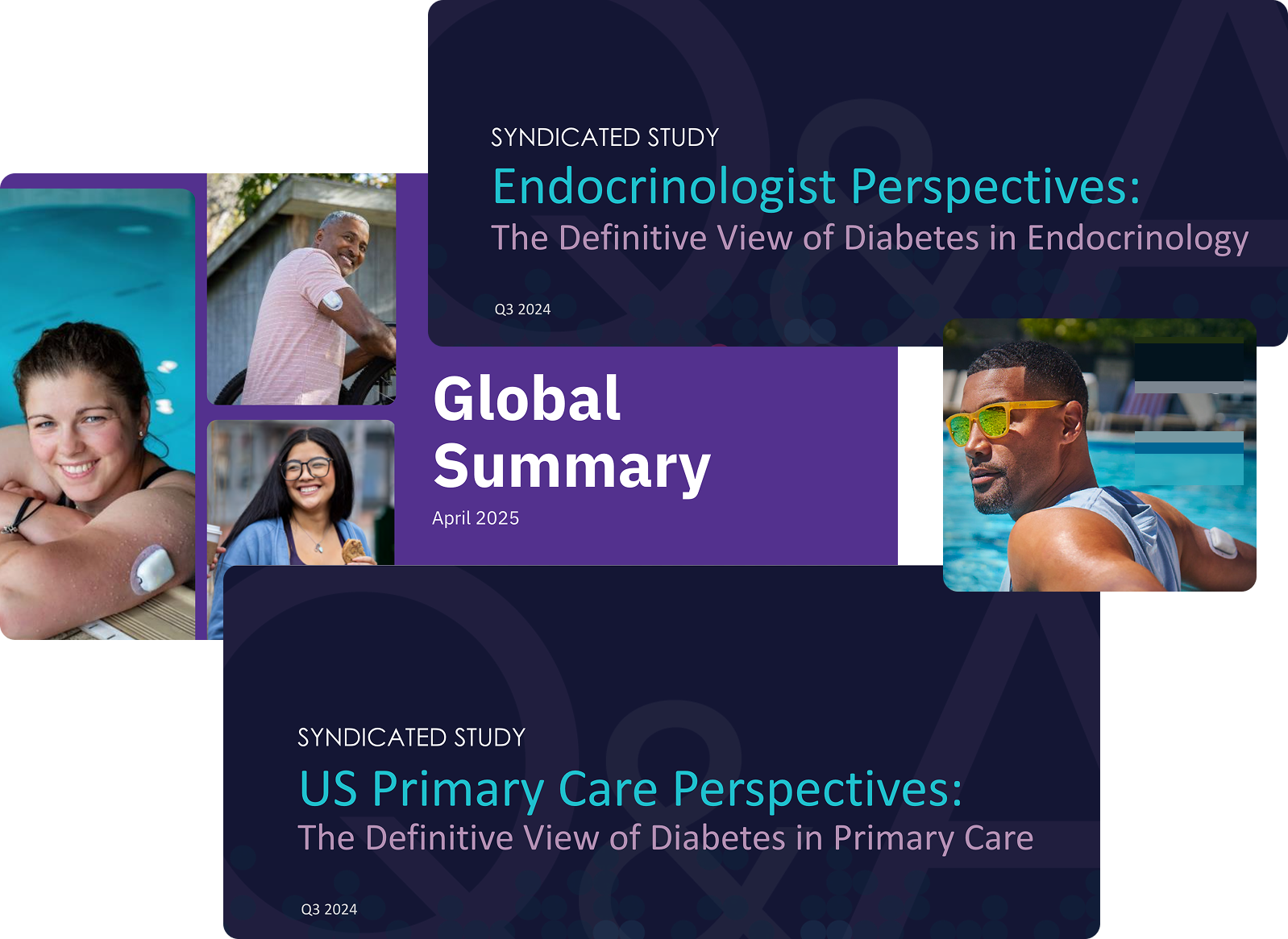
In early synthesis, one gap stood out: a deep understanding about the emotional states and mindsets that shape the consideration and choose stages in user’s journeys.
FOUNDATIONAL SYNTHESIS
Several foundational themes about existing audiences emerged quickly:
While current users love the primary insulin pump product, switching from injections or starting insulin is intimidating.
Type 1 and Type 2 patients share more than expected, particularly regarding their core site needs.
Established Type 1 communities show how peer networks empower new patients.
Type 2 patients face stigma and need different forms of support.
Healthcare providers need tools that match their time, confidence, and clinical constraints.
However, the team was missing key information about how and why key audiences learn about the product, explore new options, and navigate onboarding.
These emotional drivers would be essential for our team in defining audience models and the website’s overarching strategies.
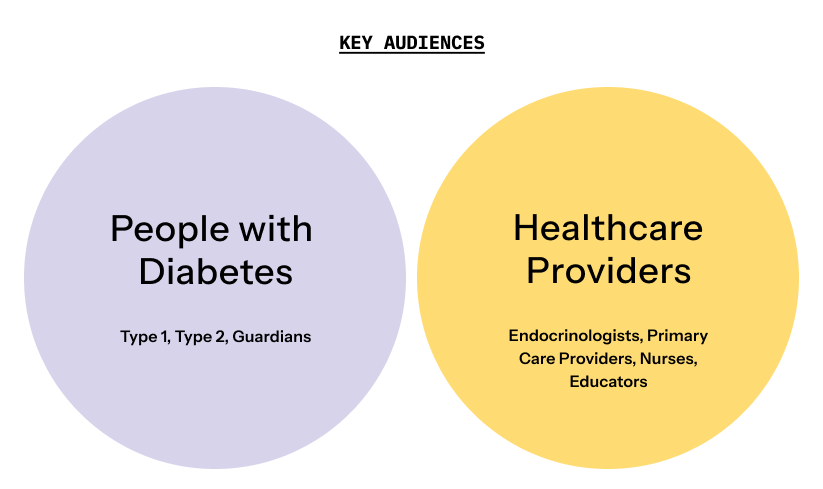
Phase 1 was about understanding what people with diabetes and healthcare providers bring to the website.
PHASE 1 - U.S. MINDSETS & NEEDS
In partnership with my co-researcher, I designed the first research sprint to explore:
The mindsets and emotions people bring to .com
What information they expect and how they evaluate diabetes tech
Where patient and provider needs converge and diverge
Methods
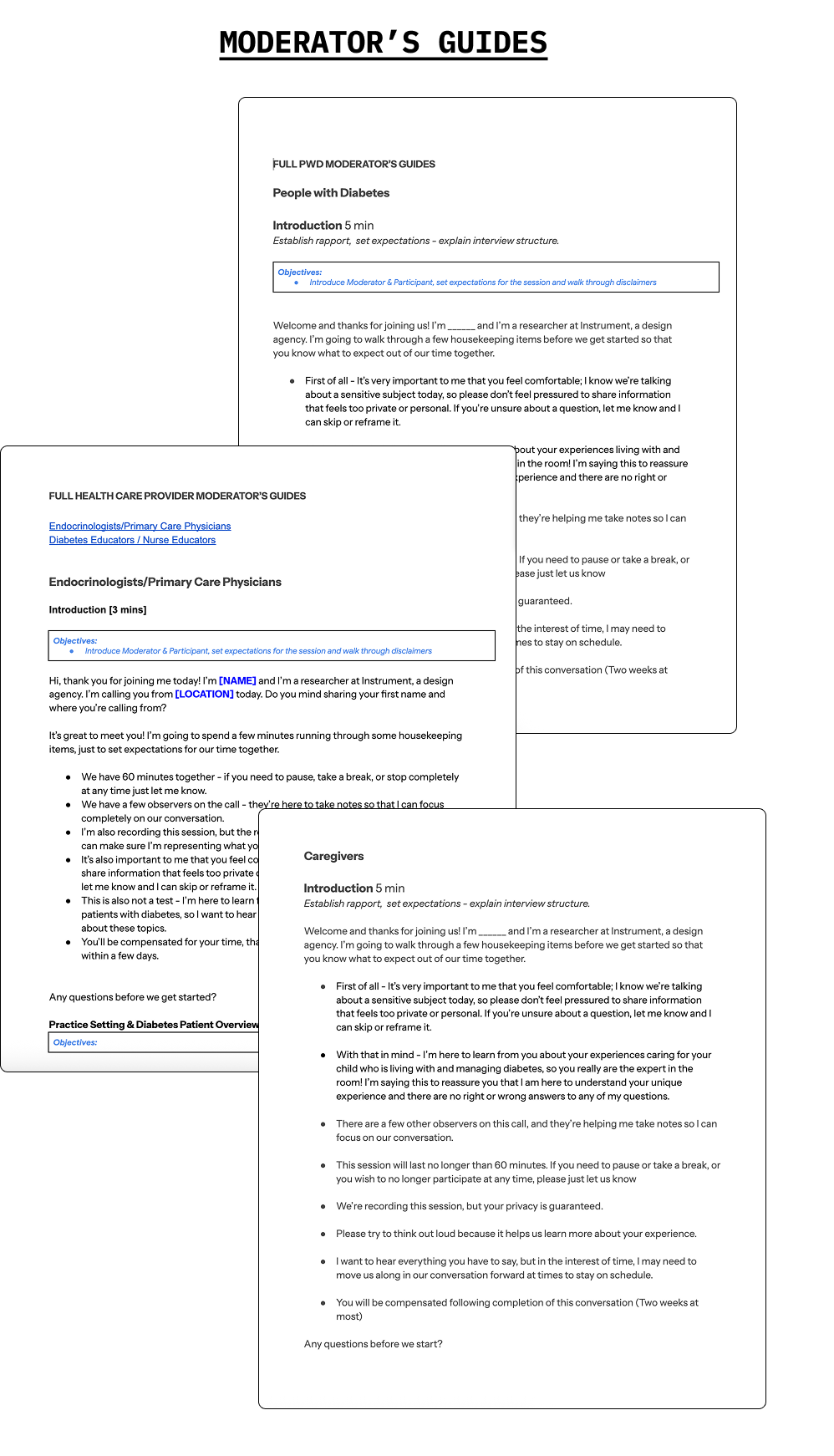
Using a qualitative approach, we conducted 10 interviews with people with diabetes, and 10 interviews with healthcare providers. This approach gave us the depth we needed to uncover not just surface-level expectations, but dig into the emotional drivers, uncertainties, and decision-making patterns that shape how audiences evaluate diabetes technology online. It also helped us surface new lines of inquiry that would shape the next phase of work.
WHAT WE FOUND
While patients and providers use different language, their key questions map to the same core needs conceptually
We arrived at a truth that felt simple, but hadn’t been verbalized: choosing and beginning an insulin pump is a shared outcome that happens when patients and healthcare providers work and move forward together.
Framing the experience around these needs was the unlock that the team needed to rally around.

We rolled these core needs into six core real-world use cases that the website must serve across both key audiences:
Understanding whether the client’s insulin pump is a fit
Comparing solutions
Building trust
Knowing what to expect when starting to use
Advocating for ones self, one’s child, or one’s patient
Accessing support
In Phase 2, we expanded our aperture to account for international complexities: regulatory standards, cultural perceptions, and healthcare model differences.
PHASE 2 - EXPANDING TO INTERNATIONAL AUDIENCES
While phase 1 focused on US audiences, stakeholder interviews happening in parallel revealed a major complexity: the website needed to work on a global stage. This had potentially huge ramifications for how the team should responsibly and strategically show up in additional markets.
To address these questions early and avoid later financial impact, we advocated for and secured a second phase of research. This phase set out to:
Pressure test our initial mindsets, jobs to be done, and mindsets for a global audience
Identify how diabetes technology evaluation differs for international audiences
Identify the information and pathways that global users need from the site
Methods
Using a mixed-methods approach, we designed a fast-follow sprint focused on audiences in 4 of the most strategically relevant global markets. Because splitting audience by region created small qualitative sizes, this approach allowed us to maximize insight depth and confidence. We:
Conducted 20 additional interviews with people with diabetes and healthcare providers
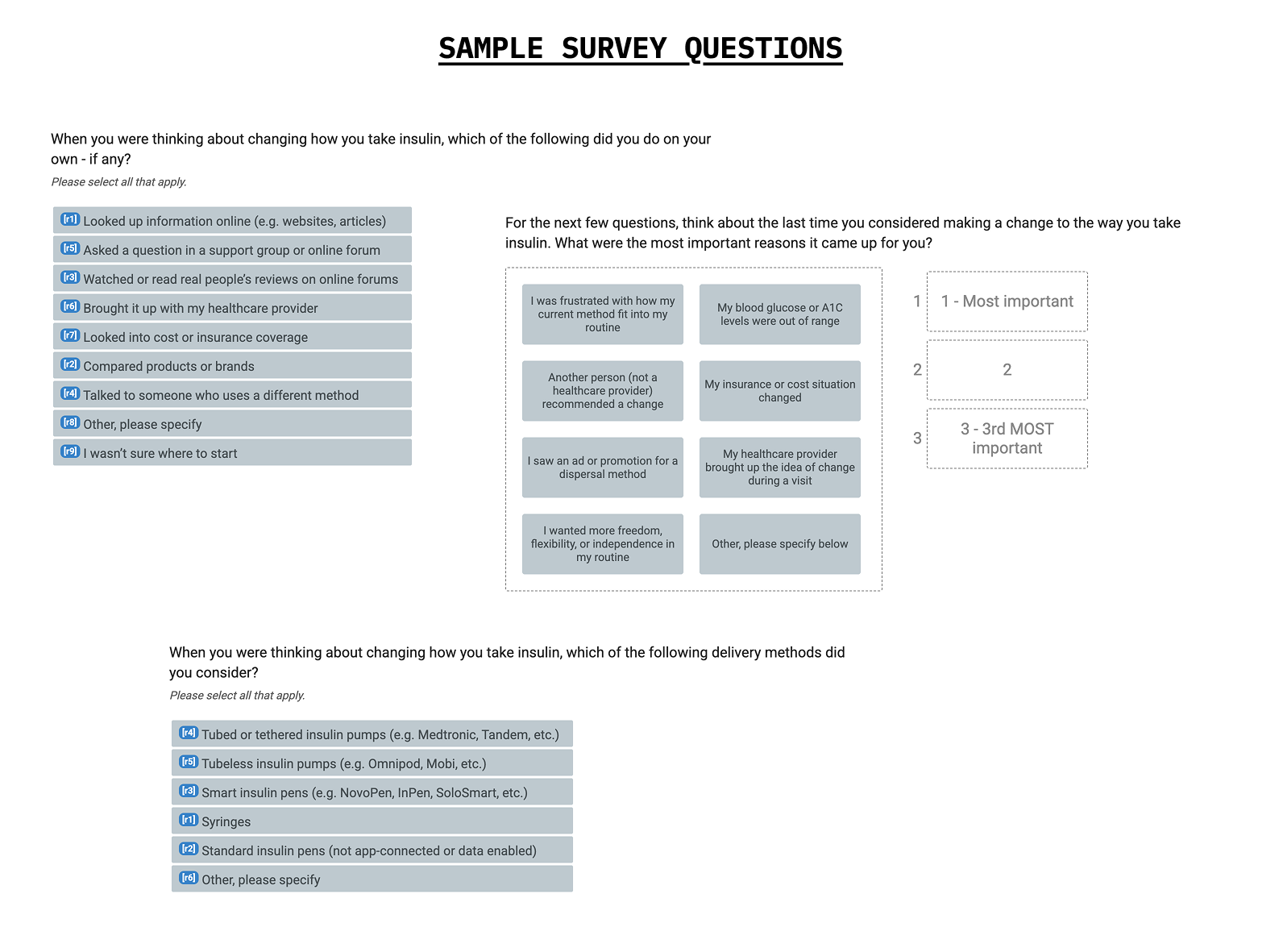
Ran a custom survey to validate and scale patterns across markets
WHAT WE FOUND
Across markets, emotional and cognitive patterns were highly consistent.
While true that regulations, culture, and team capacity had implications for the site’s UX, content, brand expression, and governance, emotional and cognitive patterns were strikingly similar - our 6 key real-world use cases stayed consistent.
Two key differences did emerge with implications for design and strategy:
Type 2 audiences are a lower global priority due to approval limitations
Providers hold significantly more influence internationally, acting as decision gatekeepers
The differences did not require entirely separate site experiences. Rather, they implicated differences in global prioritization - the strategic opportunity was to design for modularity across audiences, rather than separate experiences per market.
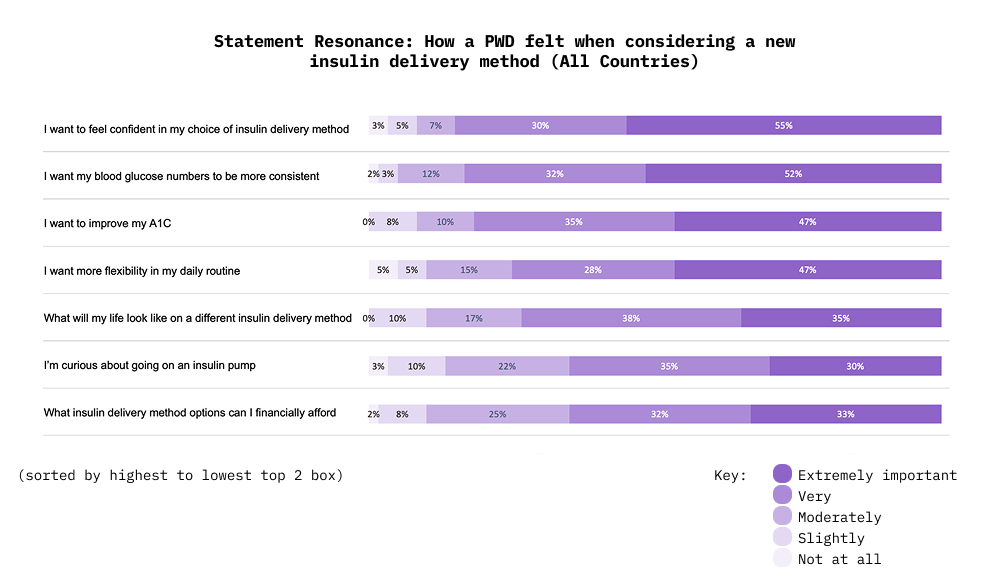
Ultimately, research helped to build a strategic foundation for global and clinical complexity across markets.
PROJECT IMPACT
We recommended that design create a website that tells a singular brand story, while creating tailored pathways for healthcare providers and patients.
These pathways would intersect where needs overlap, and diverge where information requirements differ.
It allows for each group to find what they need in the language that resonates most with them. Paired with additional marketing, the website could become a better tool for our audiences, particularly in the consider and choose stages.
REFLECTIONS
This project was an exercise in very quickly absorbing a vast amount of information, determining what truly mattered, and translating those insights into clear, actionable website strategy. It required that I very quickly learn the language of a condition I had not previously worked with.
It also surfaced the kinds of ethical questions that are core to healthcare work. Designing in this space means navigating emotionally charged moments while balancing the realities of marketing a medical device. Different identities or personal connections to diabetes on the team meant navigating emotional conversations not only while moderating interviews, but while discussing strategy with my teammates.
While this was a challenging and complex project, it was also incredibly rewarding, and taught me so much about the healthcare system. This intersection of real-world consequences, complexity, and required empathy is a space where I’d love to keep contributing.